
Introduction
Hello and welcome to the Dalal Street Diary – Your daily dose of market wisdom.
Nowadays where ever you go, people are always talk about investing. Friends boast about their stock picks, colleagues whisper about SIP returns, and news channels and social medias show and also viral trending headlines of Sensex and Nifty have touch fresh new highs. But the real question remains: “Should you put your hard earned money in the stock market, or let a mutual fund manager handle it ?”
In this blog, we’ll unpack both choices with simple explanations, relatable examples, and 2025 insights, so you can decide what’s right for you.
So grab a cup of chai, sit back, and let’s dive in.
Lets Start with understanding the Basics
What is the Stock Market ?
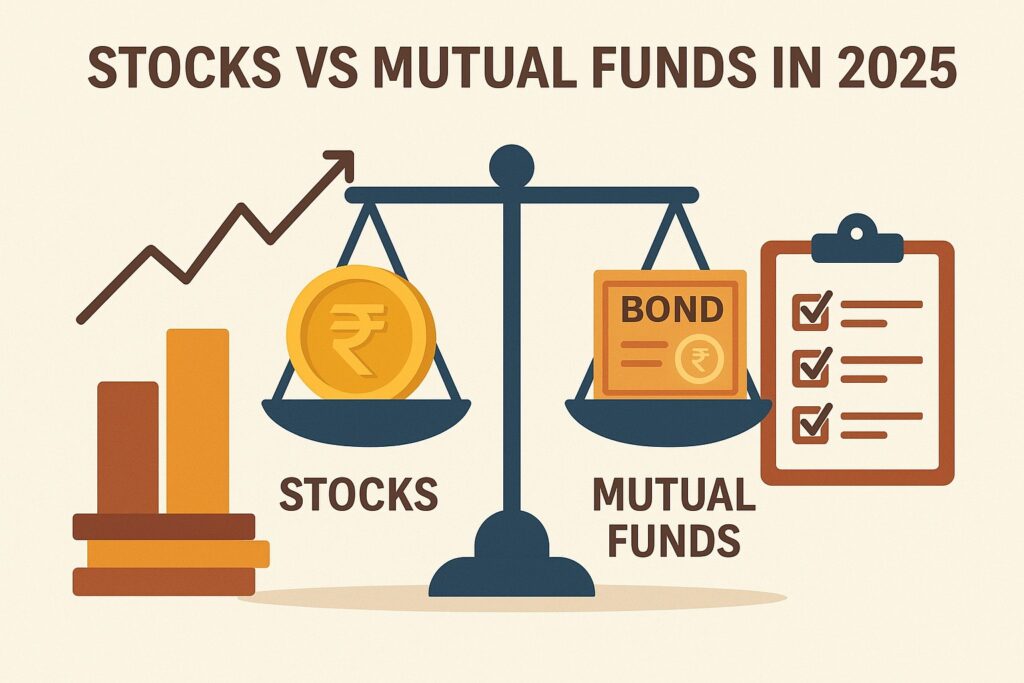
Lets assume the stock market as a giant mandi (bazaar) for shares. Big giant Companies like Reliance, Infosys, and HDFC list their shares on exchanges like NSE and BSE. When you buy a share of a company, you’re purchasing a small stake in that company. If the company perform well and generate handsome profits, your share becomes more valuable. If it struggles to generate profit, you might lose some money. I.e. When you buy even a single share of a company, you become part-owner of it. As an owner, you also share the risks if the company does well, you enjoy the rewards, and if profits rise, your benefits increase too.
Example: If you bought 1 share of Reliance in Year 2000 at around ₹50, today it would be worth over ₹2,500+ (plus dividends). But if you bought Yes Bank in Year 2017 at ₹350, today it’s under ₹20. High risk, high reward.
What are Mutual Funds ?
A mutual fund works like a community potluck. Everyone contributes money, and a professional fund manager decides where to invest stocks, bonds, gold, or a mix. You don’t pick stocks directly; the fund does it for you.
Types of mutual funds in India:
Equity Funds invest mostly in shares (high return, high risk).
Debt Funds invest in bonds (safer, lower return).
Hybrid Funds – The Middle Path
What is Hybrid Mutual Funds ?
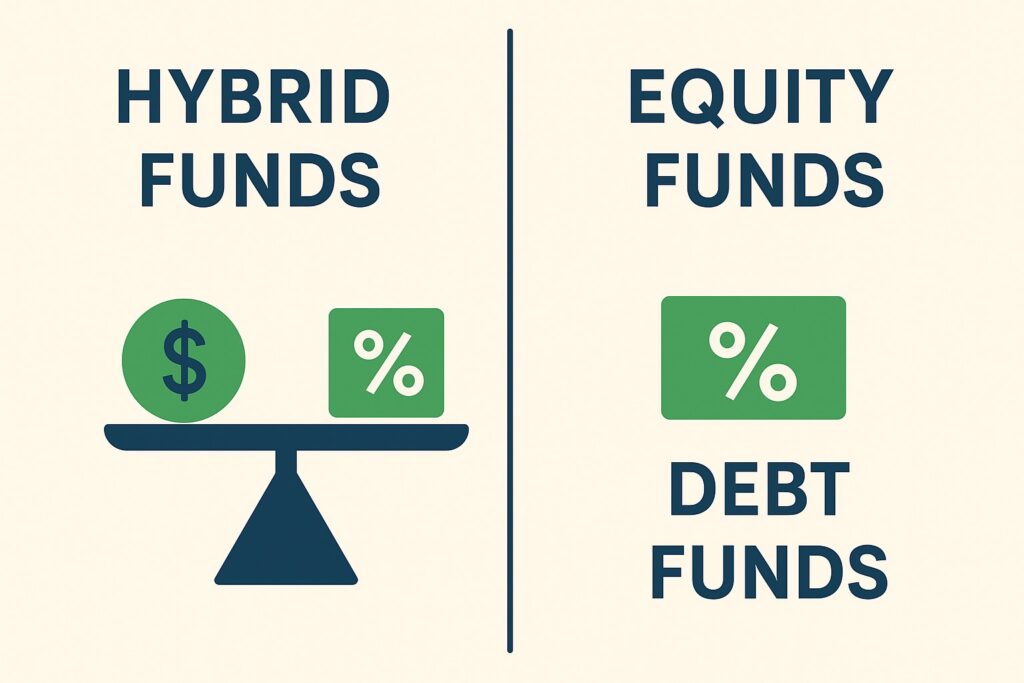
Think of Hybrid Funds as the “best of both worlds.” They invest part of your money in equities (for growth) and the rest in debt instruments (for stability). It’s like enjoying spicy street food but keeping a bottle of cold water handy so you get the thrill of returns without burning your fingers completely.
Index Funds & ETFs are Simple, Low-Cost Wealth Builders:
Index Funds and ETFs, both are like auto-pilot modes for investing. They don’t try to beat the market instead, they simply mirror popular indices like the Nifty 50 or Sensex. The beauty? Very low cost, very little headache.
Example: Lets Imagine you set up a monthly SIP of just ₹5,000 in a Nifty 50 Index Fund. You Stay disciplined for 10 years, and after compounding return it could quietly grow it into ₹12–15 lakhs. That’s the magic of patience and consistency in the market. Your money works while you sleep.
Pros & Cons of Stock Market :
Advantages
- High potential stock: This is where legends are made. If you pick and invest in the right stock, it can become a multi-bagger and transform your portfolio.
- Full control over your portfolio: Every buy and sell decision is completely yours. No fund manager, no middleman.
- Extra Perks: Dividends, bonus shares, and stock splits may looks like a small rewards, but over the period of time they compound and meaningfully increase the overall returns.
Risk
- Volatility is inevitable: Equity markets can react sharply to global events. A single geopolitical or economic headline can push portfolios into the red overnight such as how U.S. tariff announcements by Donald Trump shaken the whole global markets recently.
- Active involvement is key: Successful investing are not about “buy and forget.” It demands research, regular tracking your portfolio and domestic and global events, and further discipline to stay aligned with your long-term goals.
- Investor psychology matters: Market downturns trigger fear in the investors, while rallies generally often fuel greed into investors. Many investors lose money not because of the market itself, but due to their own emotional decisions. Such as, panic selling during sudden declines or chasing gains out of FOMO
Real World Examples – The Two Faces of the Market:
Lets Take Infosys example for easy understanding. If you had invested in its early years, your money could’ve been multiplied 100 times over 25 years. That’s the dream side of equity investing.
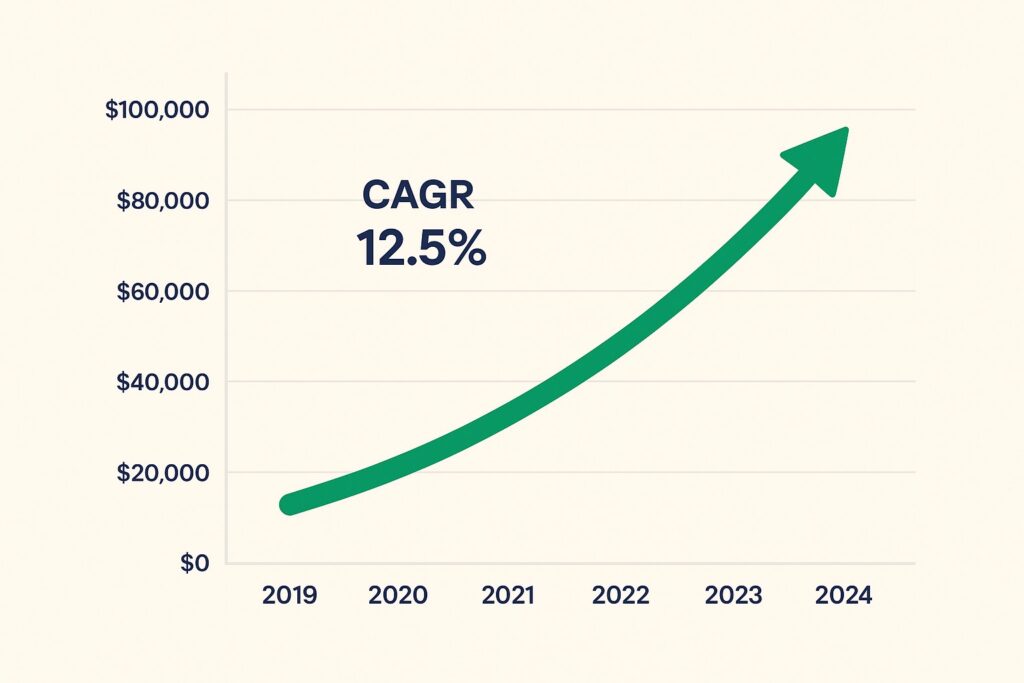
But then there’s Kingfisher Airlines. Investors who believed in its story lost everything when the company collapsed. A stark reminder that the market rewards discipline, but punishes blind faith.
Pros & Cons of Mutual Funds
Advantages
- Diversification of portfolio may reduces risk.
- Managed by highly qualified and expert professionals.
- SIPs build financial discipline.
- Easy for beginners.
Risk
- Expense ratio eats into returns.
- Fund manager’s bias/decisions affect performance.
- Less control over where money goes.
Example: If you had started an SIP of ₹10,000 in Nifty 50 Index Fund from the year 2013 could be now worth over ₹32 lakhs in 2025.
Which is Better for Beginners?
If you’re planning to start your investment journey in 2025, Mutual Funds (especially index funds) are safer. Since they require minimal time and knowledge.
But if you’re curious, willing to learn, and ready for some ups & downs, the stock market can give you better returns. The best approach? Do both.
2025 Outlook for Indian Investors
Stock Market: Sensex may touch 90,000+ in 2025-26, thanks to GDP growth and rising retail investors.
Mutual Funds: SIP flows have break the all time record highs (₹20,000+ crore monthly inflow). It shows the bullishness of investors. Index funds and passive investing are booming.
Regulations: SEBI is making markets safer with tighter rules.
Bottom line: Both avenues look strong in 2025.
How to Start Investing in stock market in the year 2025
Starting in Stock Market
Open a Demat account through reputed broker like: Zerodha, Groww, Upstox.
Learn basics of the market start with blue-chip stocks. Don’t be greedy and get trapped into the of penny stocks. Some of the blue chip stocks Reliance, Infosys, HDFC Bank, etc.
Avoid penny stocks in the beginning.
Start small invest ₹5,000 to ₹10,000 first.
Starting in Mutual Funds
Decide your goal (short term, long term).
Pick direct plans (lower cost) via Coin, Paytm Money, Kuvera.
Start a SIP (₹500 – ₹5,000 monthly).
Stick for long-term (5 – 10 years minimum).
FAQ
Yes, but usually they give market-average returns, while stocks can give extreme highs or lows.
For most people like me, SIP is better as it averages out market ups & downs.
Start with 10% to 20% of your monthly income.
Yes you can. In fact, that’s the smartest way to balance risk & reward.
Conclusion
At the end of the day, there’s no single winner.
If you want control and high risk-high reward, go for the stock market.
If you want simplicity and steady growth, start with mutual funds.
And if you’re serious about wealth creation in 2025 the real magic lies in combining both.
So don’t wait for the “perfect time.” The best time to start investing was yesterday. The next best time? Today.